
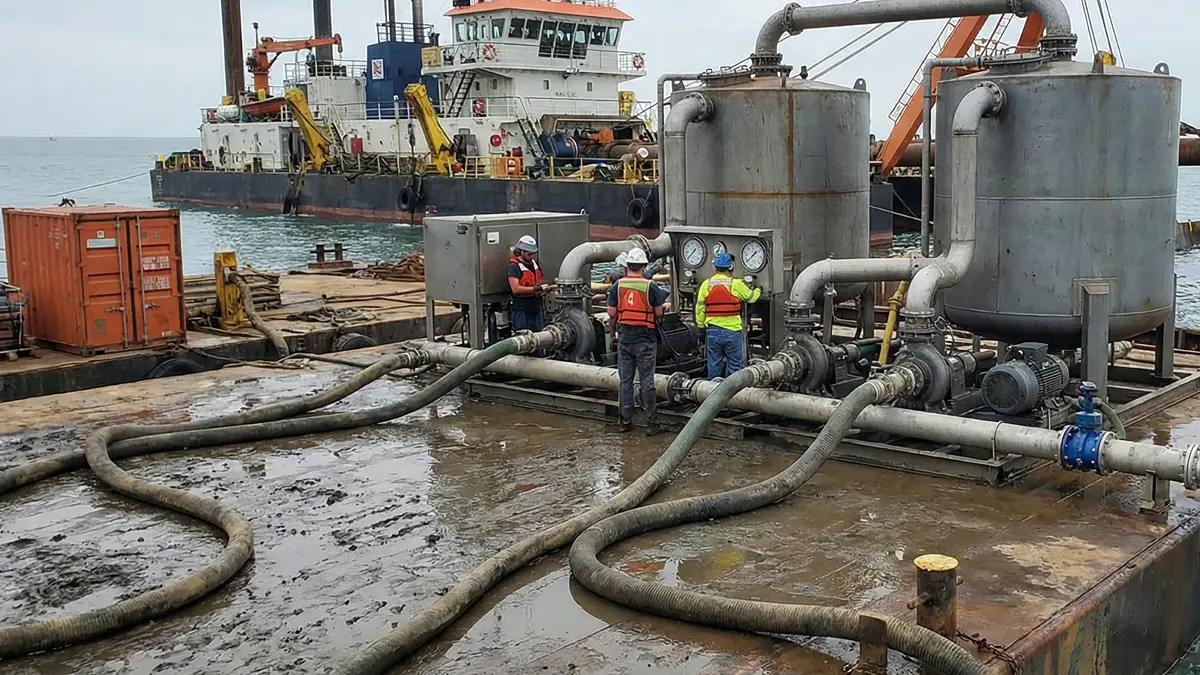

Sediment management is a constant challenge across Alabama. From the marshlands surrounding Mobile Bay to riverfront improvement work along the Mobile and Black Warrior Rivers, excess sediment affects water flow, infrastructure stability, and environmental health. These challenges become even more pronounced after heavy rainfall, seasonal flooding, or tropical storm activity, which are common along Alabama’s Gulf Coast and inland river systems.
Sediment buildup is not just an environmental concern. It directly impacts flood control capacity, public safety, navigational access, and the lifespan of municipal and industrial infrastructure. When sediment is not managed effectively, projects experience delays, rising disposal costs, and increased regulatory scrutiny. This is especially true for Alabama dewatering projects subject to strict environmental oversight.
Vacuum dewatering systems have emerged as one of the most effective sediment handling solutions for these conditions. By actively removing water from sediment rather than relying on passive settling, vacuum dewatering systems offer faster processing, improved solids capture, and better control over discharge quality. These advantages make them particularly valuable in Alabama, where clay-heavy soils and fine silts are common.
Bama Dredge has become a trusted name in this space. With extensive experience across Alabama dewatering projects, the company has built a reputation for delivering reliable vacuum dewatering systems tailored to local sediment conditions. Their practical approach, combined with proven field performance, has positioned Bama Dredge as a leading partner for sediment handling solutions throughout the state.
Understanding Sediment Challenges in Alabama
Unique Geological and Environmental Context
Alabama’s sediment profile is shaped by its geography. Many waterways contain high concentrations of clay, silt, and organic material. These fine particles hold water tightly, making traditional dewatering slow and inefficient. In river systems connected to agricultural land, sediment loads often increase after rainfall due to surface runoff and bank erosion.
Several areas in Alabama consistently experience sediment accumulation challenges. The Tennessee-Tombigbee Waterway carries fine sediments that settle in low velocity zones. Urban redevelopment sites such as Riverfront Park and Railroad Park face ongoing sediment management needs tied to stormwater control and aging infrastructure.
These environments demand sediment handling solutions that work efficiently with fine particles rather than against them.
Why Traditional Dewatering Methods Fall Short
Many projects still rely on gravity-settling basins, sandbags, or mechanical filter presses. While these methods have their place, they often struggle with Alabama’s clay-rich sediment. Gravity-based systems require large footprints and extended timeframes. Filter presses can be effective but require higher operational complexity, skilled operators, and consistent material feed conditions.
Seasonal storms further complicate the issue. Rapid inflows of sediment-laden water overwhelm passive systems, leading to overflow risks and compliance concerns. Oversight from the Alabama Department of Environmental Management requires careful control of runoff and discharge quality, adding pressure to select systems that perform reliably under variable conditions.
What Are Vacuum Dewatering Systems?
Vacuum dewatering systems are designed to actively remove water from sediment using controlled suction rather than relying solely on gravity. This distinction is critical for projects in Alabama, where sediment often contains a high percentage of clay and fine silt that naturally retain moisture. Instead of waiting for water to drain through porous media, vacuum dewatering systems slowly apply negative pressure to pull water out of the sediment structure itself.
At a basic level, these systems create a pressure differential between the sediment and the surrounding environment. Water moves toward the lower pressure zone, separating from solids more efficiently. This approach allows projects to dewater material that would otherwise remain saturated for extended periods using traditional methods. For Alabama dewatering projects operating under tight schedules or weather-driven timelines, this efficiency can determine whether they stay on track.
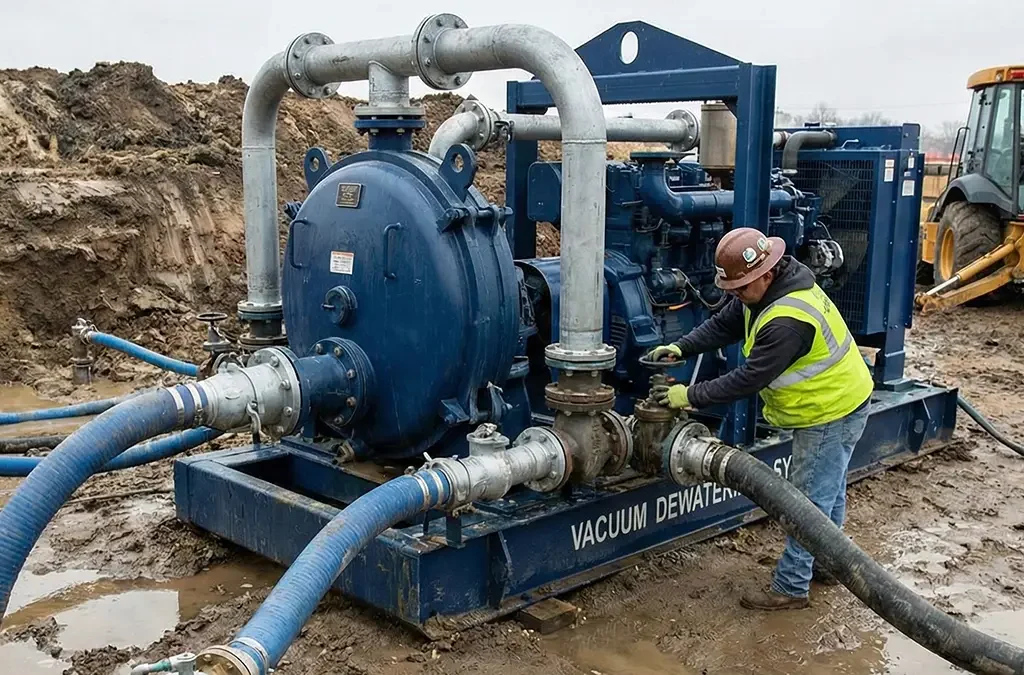
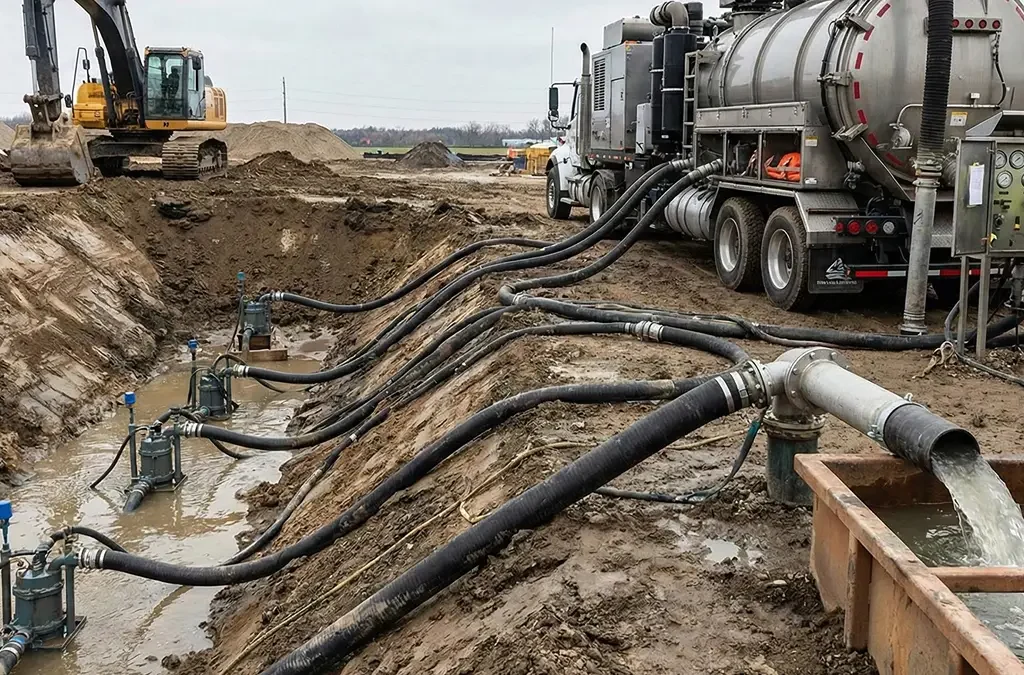
Vacuum dewatering systems are typically composed of several integrated components working together. Vacuum pumps generate consistent suction and are sized based on sediment volume and moisture content. Dewatering chambers or containers hold the slurry or excavated sediment while the vacuum process occurs. Piping and discharge systems manage extracted water, directing it to approved containment or treatment areas. Because the system is sealed, operators have greater control over water quality and flow rates throughout the process.
One of the most important advantages of vacuum dewatering systems is their ability to handle variable sediment conditions. Alabama projects often encounter changing material characteristics within a single site. Sediment near riverbanks may differ significantly from material collected in deeper channels or retention ponds. Vacuum systems adapt well to these variations because they do not rely solely on sediment permeability. This makes them a reliable choice for sediment handling solutions where consistency matters.
Compared with conventional dewatering methods, the differences are clear. Gravity-based systems depend heavily on time, surface area, and favorable material properties. Filter presses require precise material conditioning and can struggle with inconsistent feed material. Vacuum dewatering systems bridge this gap by offering faster processing without the operational complexity that often limits other mechanical solutions. This balance is why vacuum dewatering systems continue to gain adoption across Alabama dewatering projects involving municipal, industrial, and environmental work.
Key Benefits of Vacuum Dewatering Systems in Sediment Handling
- Faster Water Removal and Reduced Project Time
Time is a critical factor in sediment management. Vacuum technology accelerates water removal by applying consistent pressure across the sediment mass. This reduces reliance on evaporation or slow drainage paths.
In municipal pond cleanup projects near Montgomery, for example, vacuum dewatering systems have been used to significantly shorten project durations. Faster processing allows contractors to restore sites quickly while minimizing disruption to surrounding communities.
- Superior Solids Capture and Reduced Waste Volume
Effective solids capture directly translates to cost savings. Higher solids content means less material to transport and dispose of. This is especially important given landfill tipping fees across Alabama, which can add substantial cost to sediment removal projects.
Vacuum dewatering systems improve sediment-handling by producing drier material that is easier to manage. This reduces haul volumes and lowers overall disposal expenses.
- Flexibility Across Project Types
One of the strengths of vacuum dewatering systems is adaptability. In urban redevelopment areas like Birmingham, compact system footprints allow deployment in tight spaces. Along the coastal zones of Gulf Shores and Orange Beach, systems handle variable sediment conditions driven by tides and storm activity.
For infrastructure and flood-mitigation work in cities such as Tuscaloosa and Huntsville, vacuum dewatering systems deliver reliable performance under varying flow conditions. This flexibility makes them suitable for a wide range of Alabama dewatering projects.
- Better Compliance with Environmental Standards
Regulatory compliance is a major consideration. Vacuum dewatering systems support sediment disposal permitting by improving water clarity and reducing suspended solids in discharge streams. This helps projects meet state and federal requirements, including guidelines enforced by ADEM and the Environmental Protection Agency.
Real World Alabama Dewatering Projects Using Vacuum Systems
- Coastal Resilience Work in Mobile Bay
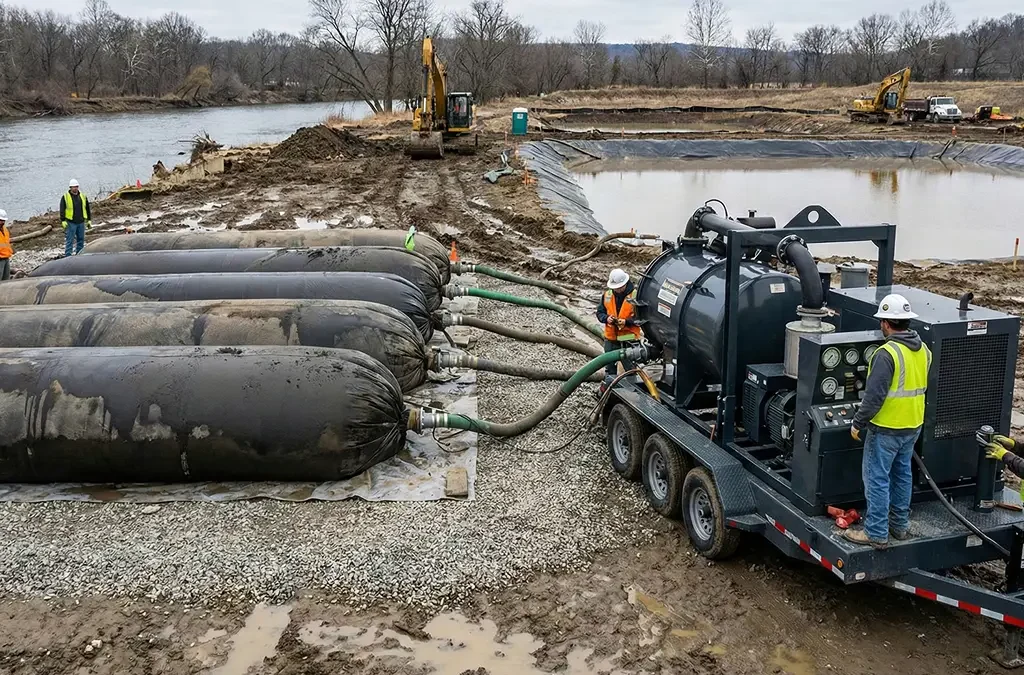
Following storm surge events, sediment accumulates rapidly in low-lying coastal zones around Mobile Bay. Vacuum dewatering systems have been selected for these projects due to their ability to efficiently process wet, fine sediment.
Bama Dredge has played a key role in deploying and optimizing vacuum dewatering systems in these environments. Their teams adjust system configurations based on sediment composition and site constraints to ensure consistent performance.
- Urban Pond Rehabilitation in Birmingham
Urban ponds often contain sediment with a high clay content, mixed with organic debris. Traditional methods struggle in these conditions. Vacuum dewatering systems have enabled faster drawdown and reduced work cycles in Birmingham rehabilitation projects. Community impact is minimized as sites are returned to service sooner.
- Industrial Site Cleanup Near Huntsville
Industrial locations near Huntsville present unique challenges due to fine-grained sediment and limited access. Bama Dredge tailored vacuum dewatering systems to meet site-specific requirements, providing effective sediment-handling solutions while maintaining strict environmental controls.
How Bama Dredge Leads in Vacuum Dewatering for Alabama
Local Expertise Combined With Proven Technology
Bama Dredge understands Alabama sediment conditions because they work with them daily. This local knowledge informs equipment selection and system configuration, ensuring that vacuum dewatering systems perform as intended.
Customized Sediment Handling Solutions
Every project is different. Bama Dredge provides tailored system sizing and modular configurations that fit urban and remote sites alike. Their sediment handling solutions are designed to address specific project goals rather than a one-size-fits-all approach.
Responsive Support Across the State
Rapid deployment is critical for many Alabama dewatering projects. Bama Dredge offers responsive on-site support and fast mobilization, particularly during emergency or weather-related work.
Proven Trust and Client Confidence
Project managers and municipal clients consistently highlight Bama Dredge’s reliability and professionalism. Their ability to deliver dependable vacuum dewatering systems has earned long-term trust across Alabama.
Choosing the Right Dewatering System for Your Project
Assessing Site Conditions: Selecting the right system begins with understanding sediment type, volume, water content, and site accessibility. Fine-grained clay sediment often benefits most from vacuum dewatering systems.
Comparing Dewatering Technologies
| Technology | Speed | Efficiency | Footprint | Cost |
| Gravity beds | Slow | Medium | Large | Low |
| Filter presses | Medium | High | Medium | Medium |
| Vacuum dewatering systems | Fast | High | Compact | Cost effective |
Key Questions to Ask: Consider scalability, pumping distance, power requirements, and local service availability. These factors influence long-term project success.
Environmental and Economic Impact for Alabama Communities
Reduced Environmental Footprint
Effective sediment management plays a direct role in protecting Alabama’s waterways. Poorly dewatered sediment increases the risk of runoff, turbidity, and downstream contamination. Vacuum dewatering systems reduce these risks by producing drier, more stable material that is easier to contain and transport. This minimizes the chance of sediment reentering rivers, bays, and drainage systems during handling or disposal.
By improving solids capture, vacuum dewatering systems deliver better water quality. Cleaner discharge water means reduced stress on receiving environments and greater confidence during inspections and reporting. For projects operating near sensitive habitats or populated areas, this level of control is essential. Sediment-handling solutions that reduce environmental impact help communities preserve recreational waterways while maintaining regulatory compliance.
Cost Savings for Contractors and Public Agencies
Economic efficiency is a major driver in selecting a dewatering system. Vacuum dewatering systems shorten project durations by accelerating water removal. Less time on site translates into lower labor costs, shorter equipment rental periods, and fewer weather-related delays. These savings become especially meaningful on larger Alabama dewatering projects where sediment volumes are significant.
Waste disposal costs are also reduced. Drier sediment weighs less and occupies less space, reducing transportation and landfill costs. In regions where disposal facilities are limited or located far from project sites, these savings can be substantial. By improving sediment handling solutions, vacuum dewatering systems help contractors and agencies stretch budgets without compromising performance or compliance.
Supporting the Local Workforce and Economy
Dewatering projects do not exist in isolation. They impact local economies and employment. Bama Dredge’s approach emphasizes the use of trained local operators and technicians who understand Alabama’s conditions. This not only improves project efficiency but also keeps skilled labor and investment within the state.
When projects move efficiently and remain compliant, communities benefit from reduced disruption and faster site restoration. Public parks reopen sooner, waterways regain capacity, and infrastructure remains functional. These outcomes reinforce the value of selecting reliable vacuum dewatering systems that support both environmental stewardship and economic stability across Alabama.
Delivering Reliable Sediment Control for Alabama’s Waterways
Vacuum dewatering systems offer a practical and efficient solution to Alabama’s sediment management challenges. Their ability to handle fine-grained materials, accelerate project timelines, and support environmental compliance makes them ideal for Alabama dewatering projects.
Bama Dredge stands out as a trusted partner, delivering proven vacuum dewatering systems and sediment handling solutions across the state. Their local expertise and commitment to performance make them a reliable choice for contractors, municipalities, and agencies.
To learn more or request a site assessment, contact Bama Dredge and speak with a team that understands Alabama sediment conditions firsthand.